Contra-Border, a dance on camera collaboration with Alfonso Cervera
Contra-Border emerges from a practice-as-research that experiments with the presence of diverse movement vocabularies in contemporary dance to rethink decolonial embodiment. Conceptually, rather than framing decolonization as a return to a “pure” origin paired with the erasure of the colonizer’s culture, Contra-Border proposes that the postcolonial body holds layered movement histories simultaneously; it brings forth coexistence but no resolution.
The film stages this tension through choreographic and cinematic strategies. Editing constructs both choreography and visual text. Structured American contra dance formations gradually incorporate Afro-Latine and Folklorico-derived vocabularies. The camera actively participates by zooming in/out as heterogeneous vocabularies meet; highlighting friction, overlap, and transformation; looping, rupturing, or sequencing dance phrases or fragments.
By placing these embodied negotiations within a border landscape, Contra-Border makes viewers experience decolonization as an ongoing, lived process.
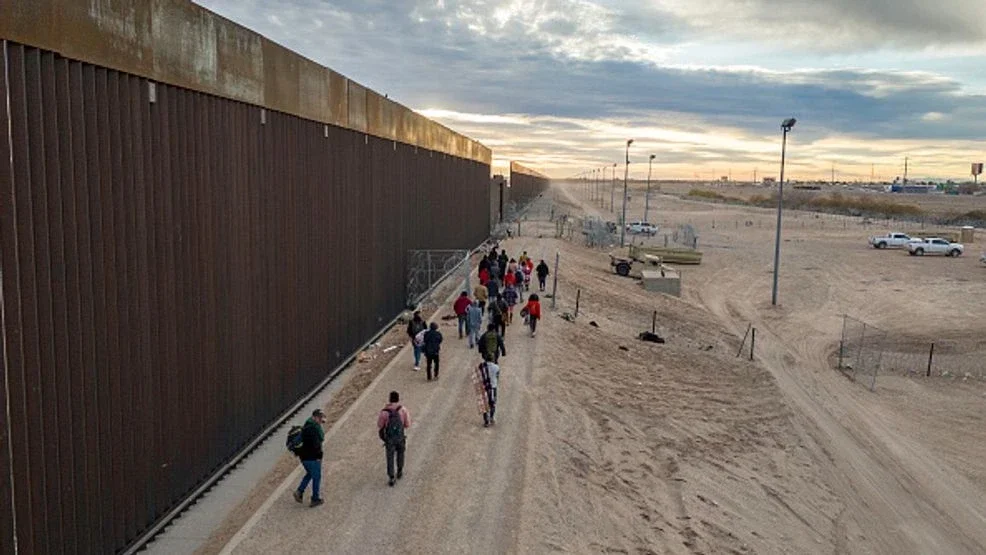
Photo by John Moore/Getty Images